
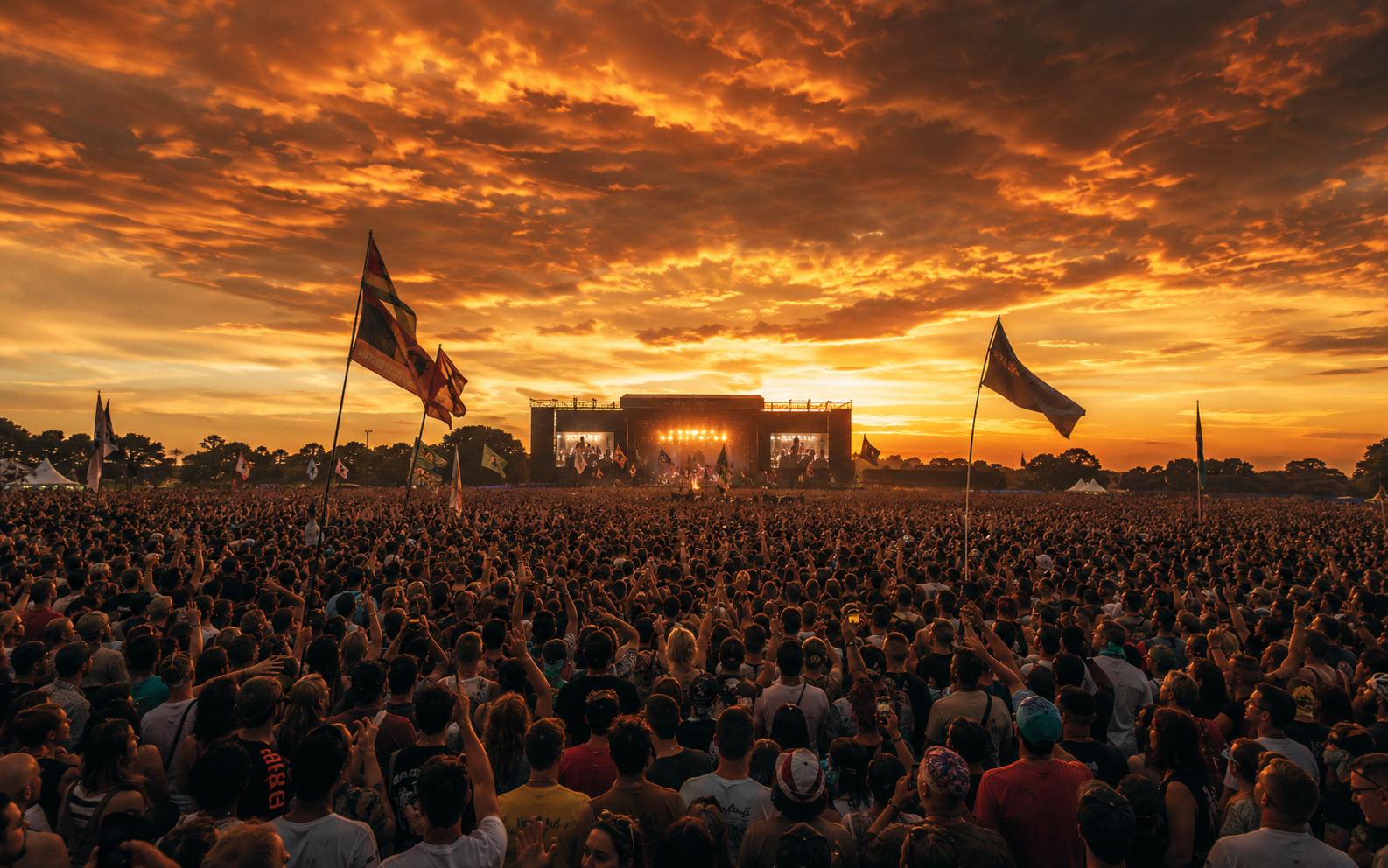
For decades, the festival model was simple. Book three massive headliners, fill the undercard with up-and-comers, sell tickets on the strength of the names at the top of the poster. But that model is breaking apart, and the reasons reveal something fundamental about how our relationship with music has changed.
The Headliner Shortage
There are not enough legacy acts left to headline major festivals. The Rolling Stones, Paul McCartney, Elton John — the generation of artists capable of selling 80,000 tickets on name alone is aging out. The next generation of stadium acts is smaller, more fragmented, less universal. No artist under 40 commands the cross-generational appeal that festivals once relied upon. Beyonce and Taylor Swift can do it, but they do not need festivals. Everyone else is fighting for a shrinking pool of headliner-level names.
The Playlist Generation
Younger festival-goers do not buy tickets to see a headliner. They buy tickets for the experience, the vibes, the social currency. They are as likely to spend Sunday night at the tiny tent discovering a band they found on TikTok as they are watching the main stage closer. This is not a failure of attention spans. It is a democratisation of taste. When your listening history spans 50 genres, no single artist represents your entire identity.
What Replaces the Headliner
The smartest festivals are already adapting. Instead of one massive headliner, they offer three or four co-headliners across multiple stages. They invest in production, art installations, food, and immersive experiences. The festival becomes the attraction, not any single act. Primavera Sound, Pitchfork Paris, and End of the Road have all moved toward this model with considerable success.
A Better Future for Artists
The death of the headliner model could actually benefit working musicians. When festivals stop spending 60 percent of their budget on a single act, more money flows to the undercard. More bands get paid fairly. More diverse lineups become economically viable. The pyramid gets flatter, and the audience discovers more music. That is not a crisis. That is progress.