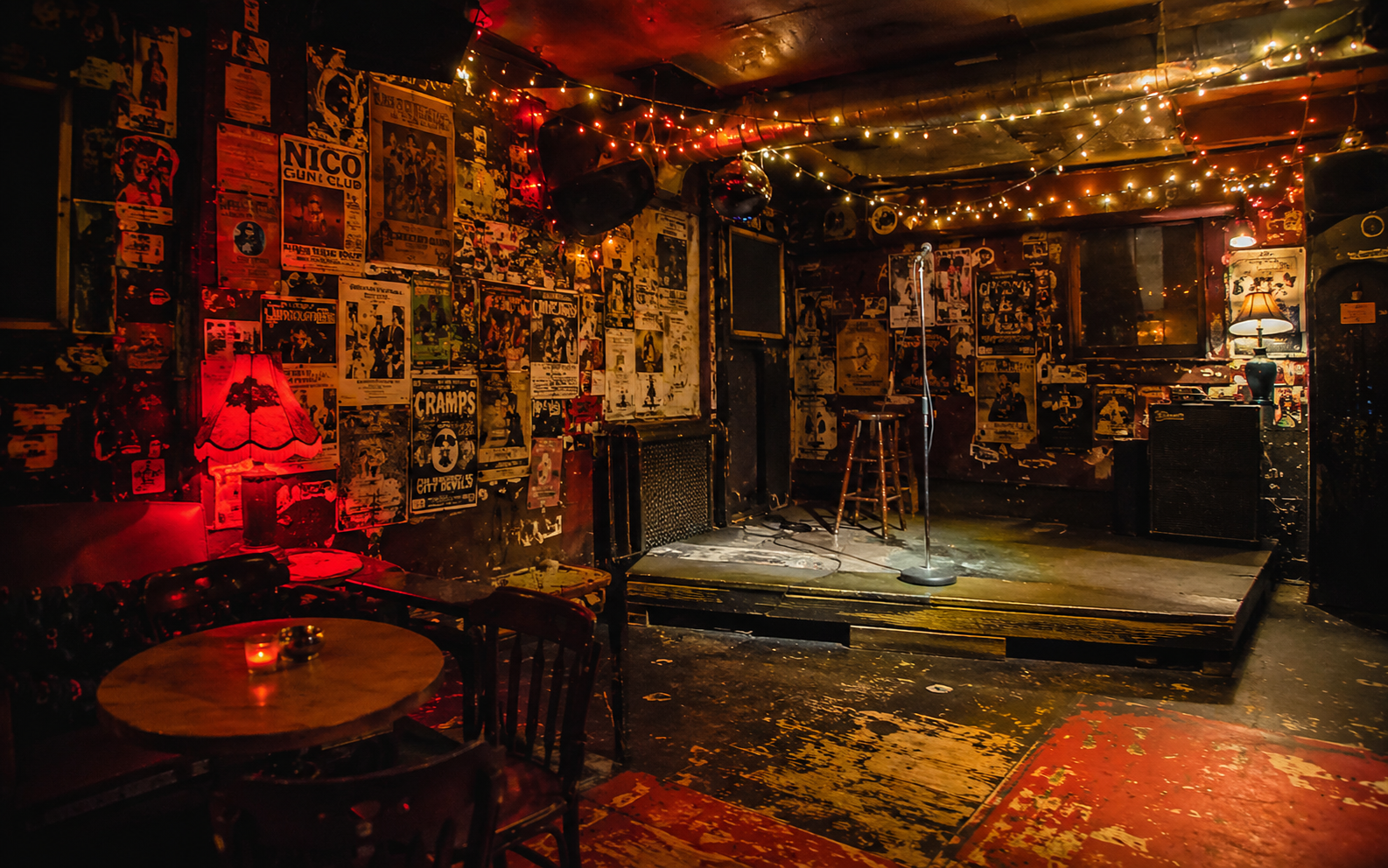

Something interesting is happening in live music. While arenas get bigger and festival stages get louder, a counter-movement is growing in the opposite direction. Across cities worldwide, musicians are choosing to play in rooms that hold 50, 60, maybe 80 people. No PA system. No monitors. Just instruments, voices, and the natural resonance of four walls.
Why Smaller Sounds Better
There is a point at which amplification stops serving the music and starts fighting it. In a room small enough, you do not need a PA at all. An acoustic guitar fills the space naturally. A voice reaches every corner without a microphone. The audience hears the music as it actually sounds, unmediated by speakers and mixing desks. This is how humans experienced music for thousands of years before the 20th century, and there is a reason it still resonates.
The Intimacy Economy
In an age of infinite digital content, scarcity creates value. A show for 60 people cannot be replicated or streamed without losing its essence. You had to be there. That exclusivity is not elitism. It is authenticity. Artists who can track upcoming shows through platforms like Songkick are finding that their smallest shows sell out fastest and generate the most devoted fans. The audience at a small-room show is fully present in a way that a festival crowd never can be.
The Economics Actually Work
A counterintuitive truth: small-room shows can be more profitable per head than large venue gigs. No sound engineer to pay. No lighting rig to hire. No venue fee beyond a modest room rental. When a musician charges thirty pounds for a 60-capacity show, that is eighteen hundred pounds for ninety minutes of work with almost no overhead. Many artists are discovering they can earn more from four intimate shows than one 500-cap venue gig after the promoter takes their cut.
A Return to Listening
Perhaps the most valuable thing about small-room acoustics is what it demands from the audience. You cannot talk through it. You cannot scroll your phone without being noticed. The format insists on attention, and in return it delivers an experience that no arena show can match. When the singer's breath is audible between phrases, when you can hear fingers on fretboards, music becomes a conversation rather than a broadcast.